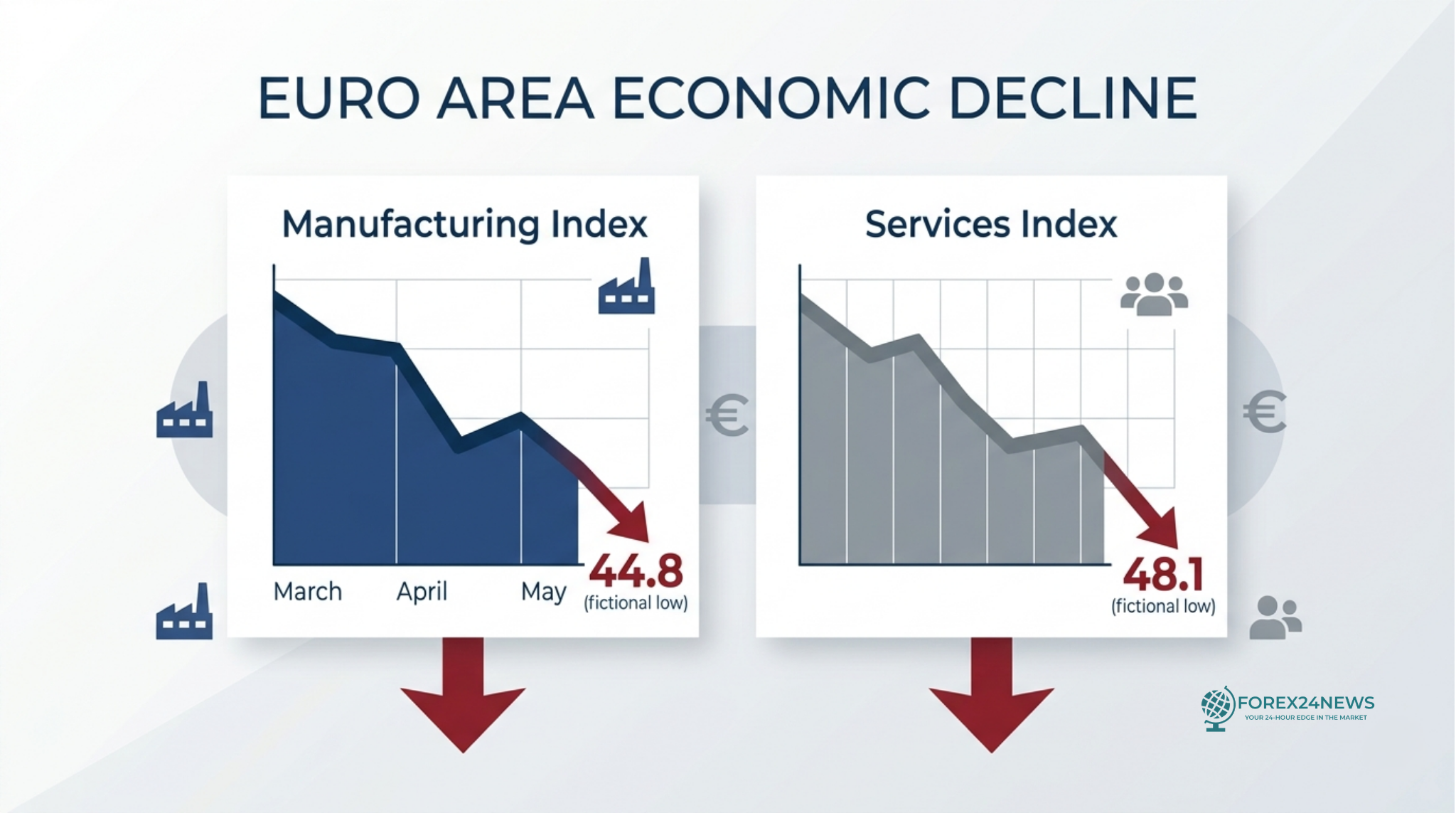
Euro area economic activity fell at its quickest pace in over two years in May, primarily due to weakened demand conditions and rising cost pressures. France notably contributed to this decline among major economies.
The manufacturing index reached a three-month low, while the services index hit a 63-month low. The composite index also fell to a 31-month low, indicating a high likelihood of economic contraction in the euro area during the second quarter.
Impact on business sectors
New business in the services sector experienced its sharpest decline in a year and a half. Manufacturing conditions are deteriorating as the initial surge in activity from March and April diminishes, leading to reduced output.
Input cost inflation accelerated for the seventh consecutive month in May, reaching a three-and-a-half year high. Additionally, the average prices for goods and services rose at the fastest rate in 38 months. Manufacturers are facing significant supply-chain disruptions, with suppliers’ delivery times lengthening to the greatest extent in nearly four years.
The flash PMI survey data reveals that the eurozone economy is increasingly affected by the ongoing conflict in the Middle East. Output has contracted for two consecutive months, with the decline rate accelerating in May to the highest level in over two and a half years. The survey suggests a potential contraction of 0.2% in the euro area economy for the second quarter.
Job losses are becoming more widespread as business confidence in a quick recovery diminishes. The service sector is particularly impacted by rising living costs linked to the conflict, especially due to higher energy prices. While manufacturing has seen some temporary support from stock building, demand for goods and services is now declining.
The supply shock from the conflict is worsening, with increasing supply chain delays. These shortages could hinder growth in the coming months and further elevate inflation pressures. The survey’s price indicators suggest inflation may approach 4% in the near future, complicating the situation for policymakers as the region faces an economic downturn.
You can access our other news on Forex markets and global market developments here.