1 December 2025
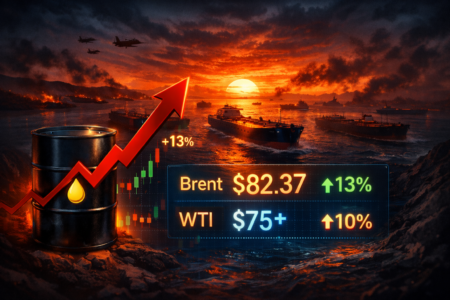
Brent crude opened 1 Dec 2025 at $67.34 and WTI at $63.19, dipping 2.2% overnight after OPEC+ revised its Q1 2026 crude production guidance.
Major announcements from the emergency energy committee:
- Output target rate reduced from 40.2 mb/d to 39.7 mb/d
- Existing supply cuts extended into Ramadan 2026 (Feb 26 – Mar 28)
- Saudi confirmed additional 200K b/d voluntary reduction
- UAE and Iraq agreed to stricter export compliance tracking using GPS tanker stamps
Despite extended cuts, prices fell due to:
Weak-side pressure forces
- China PMI unexpectedly declined to 49.2, signaling contraction
- U.S. shale output hit a historical record of 13.7 mb/d
- Warmer-than-expected winter lowered seasonal energy demand projections
- Rising global LNG inventories reduced crude hedging appetite
Technically:
- Brent support: $66
- Resistance: $69.80
- Breakdown risk if it closes under: $65.60

Conclusion:
Although OPEC+ extended cuts, the market reacted more to China slowdown + oversupplied U.S. shale, keeping crude bearish for now. Until economic demand improves, range-bound pressure may hold Brent between $66–70.
Quick FAQs:
Q1: Are production cuts bullish?
Fundamentally yes, but demand weakness can overpower supply tightening.
Q2: Why did oil fall even with lower output?
Because China’s economic contraction and U.S. oversupply dominated sentiment.
Q3: What to watch next?
China NBS trade data + tanker compliance reports + U.S. EIA storage stats.